Nature is Capital. Capital must now account for Nature.


Reframing risk, value and resilience in a biodiversity-dependent economy
By Group 1, Finance for Nature Professional Certificate, Edition 6
Nature has long been treated as a backdrop to economic activity, rather than a determinant of it. Natural systems have been taken for granted, assumed to be abundant, silent providers of raw materials, land, water and climate stability, external to the balance sheet. That time is now passing.
Today, the degradation of ecosystems is no longer simply an environmental concern; it is a real economic risk. Across industries and geographies, nature loss translates into measurable financial exposure, affecting revenues, asset valuations, operating costs, access to capital and long-term competitiveness. This insight is no longer speculative. Scientific evidence and financial analysis are converging on a common conclusion: nature underpins economic performance and stability. Nature-related risks are pervasive, material and systemic, capable of reshaping capital flows and economic outcomes.
This article is a collaborative reflection from the International Union for Conservation of Nature (IUCN) Finance for Nature Programme. It draws from the framework articulated by the World Economic Forum in the 2020 report Nature Risk Rising: Why the Crisis Engulfing Nature Matters for Business and the Economy, which categorizes nature-related risks into four interlinked dimensions transmitted through physical disruption, regulatory change, market volatility and reputational pressure. The report identifies biodiversity loss and ecosystem degradation as one of the top global economic risks, estimating that more than half of global GDP is moderately or highly dependent on nature and its services. This message is consistent with the recently published IPBES Business and Biodiversity Assessment which frames biodiversity not as a sustainability add-on, but as an economic input like labour or capital – one that shapes cost structures, supply reliability and market access.
Unpacking the economics of interdependence

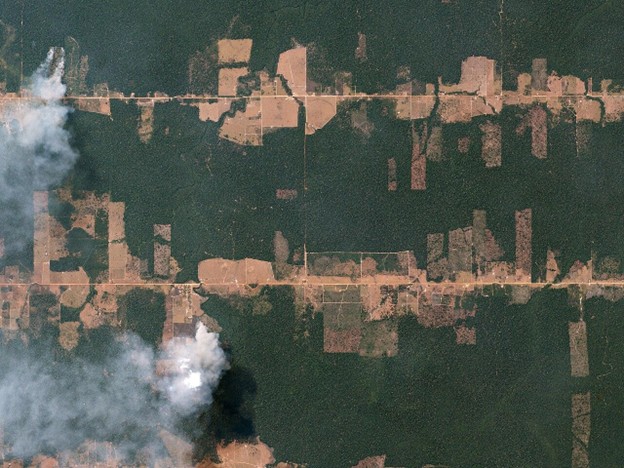
and disrupts critical ecosystem services. CC-BY-SA 4.0: Planet Labs Inc.
Mining: high demand meets ecological constraint
Mining embodies the paradox of the net-zero transition: it supplies the critical minerals needed for electrification and renewable energy, yet it is increasingly exposed to climate and nature risks. Extreme weather disrupts operations, damages infrastructure and turns water from an operational asset to liability, raising rehabilitation costs and financial exposure. An independent report by the Institute for Energy Economics and Financial Analysis found Australia’s largest coal mining companies lost an estimated 20 million tonnes of production from flooding and severe weather in 2022, equating to more than $5 billion in lost sales. In resource-dependent economies like South Africa, where mineral exports remain a cornerstone of GDP and employment, the implications are systemic and increasingly vulnerable to climate volatility.
Transition risks are accelerating in parallel. Decarbonization mandates, carbon pricing and trade measures such as the EU’s Carbon Border Adjustment Mechanism are embedding climate costs into global markets. Capital is becoming more selective as investors reassess long-term exposure to high-emission and nature-destructive assets. According to a stress test by Barclays bank, mining companies could see earnings drop by as much as 25% over five years due to nature degradation. Reputational and legal risks also compound the pressure, with disasters such as the 2019 Brumadinho dam failure demonstrating how environmental mismanagement can rapidly erode financial and social value. Allegations of greenwashing, biodiversity loss and violations of Indigenous rights increasingly threaten companies’ social licence to operate.

Cocoa: when forest loss disrupts a global market
Cocoa feeds a global chocolate market worth tens of billions of dollars annually. Cultivated by approximately six million smallholder farmers throughout the tropics and with close to two thirds of global production in Côte d’Ivoire and Ghana, the cocoa supply chain is deeply intertwined with forest ecosystems.
A significant driver of deforestation, cocoa production is itself impacted from the resulting habitat destruction, biodiversity loss, soil degradation and altered microclimates leading to compromised yields and quality. The latest report by WWF finds that cocoa cultivation has driven nearly 60% of agricultural commodity–related forest loss in Côte d’Ivoire, Ghana and Cameroon, with Liberia now emerging as the next deforestation hotspot in this boom-and-bust cycle. Pollination services decline as forests disappear, affecting productivity and pricing in global markets. In some regions, farmers are already relocating as traditional growing areas become too dry for viable production.
As a result of these nature-related impacts, cocoa production has declined significantly in recent years, driving up prices and forcing chocolate companies to pass on higher costs to consumers. In the United Kingdom, chocolate confectionery prices in 2025 were 12% higher than the previous year, and 27% higher over two years. As chocolate bars become smaller and more expensive, consumer demand drops. For example, Easter egg sales in the Netherlands dropped by 12.5% in 2025.
The pressure due to physical risks is increasingly compounded by new transparency rules. The EU Deforestation Regulation (EUDR) now requires geolocation data and proof of legal, deforestation-free production for all cocoa entering the European market. Non-compliance can trigger fines and market exclusion, and due diligence laws in Germany and across the EU extend legal responsibility deep into supply chains. Consumer expectations are also shifting and the first cocoa-free chocolate alternatives are already here. Ethical sourcing claims, supply chain transparency and reputational positioning increasingly influence where and how cocoa brands can compete. Civil society campaigns and litigation against major manufacturers highlight how reputational risk rapidly transmutes into financial exposure.
Cattle: heat, land and the cost of expansion
Livestock production is among the most visible interfaces between agriculture and ecosystem conversion. In tropical regions especially, it remains a significant driver of deforestation and ecosystem fragmentation. These ecological changes, in turn, generate direct costs, due to the erosion of ecosystem services. Drought disrupts feed and water availability, increases mortality and erodes margins. Heat stress alone could result in annual global production losses ranging into the tens of billions of dollars by the end of the century.
Regulatory responses are intensifying. Under EUDR, beef exported to the EU must be verified as deforestation-free. Legal rulings imposing substantial compensation for illegal forest clearance signal a willingness by courts to enforce ecological accountability. Meanwhile, market dynamics are shifting not only because of policy, but also due to competitive pressure, with evolving consumer values reflected on the rapid rise of plant-based alternatives. Civil society campaigns led by organizations such as Global Canopy and Amnesty International further amplify reputational scrutiny, influencing investor confidence and brand perception.
For financial institutions and downstream buyers, exposure to livestock supply chains is converging into a new risk calculus. Major traders and meat processors operating in high-risk biomes increasingly face due diligence obligations, traceability requirements and the potential exclusion from premium markets if compliance cannot be demonstrated. What was once treated as an environmental externality is rapidly crystallizing into credit risk, valuation adjustments and cost of capital differentials, embedding ecological performance directly into financial performance.
Textiles: nature embedded in fashion
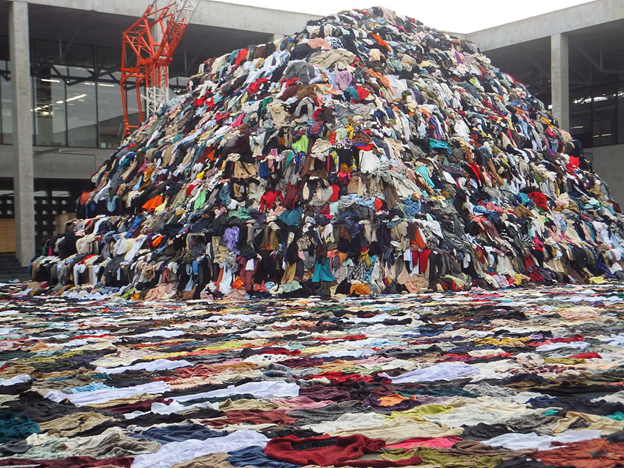
The textiles sector is increasingly exposed to nature-related disruption because its primary raw materials – cotton, wool, cashmere and viscose – are directly dependent on functioning ecosystems.
The Aral Sea Crisis, a major 20th-century ecological disaster, resulted from massive water diversion for Soviet-era cotton irrigation, turning the world’s fourth-largest lake into a toxic desert. This remains one of the clearest historical examples of how mispriced natural capital can generate long-term economic and social loss. More recently, drought-driven, erratic weather and climate-related issues have significantly impacted fibre yields and quality, leading to dramatic price volatility and supply chain fragility in major producing countries such as India and Pakistan. Beyond water scarcity, invasive pests also have a devastating effect on cotton production worldwide. The financial impact of these physical risks is not limited to cotton. Pasture degradation in Mongolia due to overgrazing and weak management has reduced cashmere productivity, and forest degradation in Indonesia is constraining viscose pulp supply. Ecosystem decline is constricting fibre availability at source, generating higher sourcing costs and operational expenses.
Regulatory frameworks are expanding to address deforestation, fertilizer use, land rights and due diligence obligations. Compliance raises procurement costs and extends oversight responsibilities across complex global supply chains. Under emerging disclosure frameworks and due diligence laws, brands are increasingly held accountable not only for emissions, but also for biodiversity impacts embedded in upstream sourcing. At the same time, investor expectations are shifting, with capital flowing toward companies that demonstrate credible biodiversity strategies, traceable sourcing and supply chain standards. Brands exposed to forest degradation, water-intensive practices or land conflicts face consumer backlash and shareholder pressure. In a sector built on globalized sourcing, ecological instability translates directly into supply chain instability – and therefore into financial instability.

Real Estate: valuing risk in the built environment
Real estate historically valued location, design and use. Today, environmental and climate risks ecological exposure increasingly influence fundamental valuations, since the built environment consumes approximately 40 percent of the world’s natural resources. The sector is exposed to climate change and biodiversity loss and at the same time a major contribution to these pressures. Physical climate hazards, such as floods, wildfires, heat stress, drought and hurricanes are increasingly reflected in property valuations and insurance premiums. Empirical evidence confirms these effects. In certain coastal regions, long-term price growth has slowed markedly due to rising sea levels and storm exposure. Among 17 US states analyzed in a 2019 First Street Foundation report, Florida has seen the greatest loss in relative home values at $5.4 billion, followed by New Jersey at $4.5 billion, and New York at $1.3 billion. At the same time, water stress raises operating costs through higher water prices, while reducing tenant attractiveness in water-constrained regions. Water stress also delays construction timelines as there is a shortage of water required for producing building materials such as cement.
Developers face habitat restoration obligations and extended planning timelines. In England, mandatory biodiversity net gain rules introduce additional capital expenditure and land allocation constraints, although the benefits when biodiversity net gain is included in the design from the outset can be substantial to both people and the local environment. Where developments degrade wetlands or forests, reputational backlash can depress asset values and deter investment.
Unlike industries such as mining, textiles and cattle, real estate is only at the foothills of understanding its ecological dependency and when the industry does wake up to the full implications, there is risk of yet further repricing.
A systemic repricing is underway
Across these sectors, a common thread emerges. Nature-related risks are no longer theoretical, but manifest as higher operating costs, volatile input prices, compliance expenditures, litigation and fines, market exclusion, asset devaluation and capital reallocation. Financial institutions, regulators and corporations are beginning to recognize that ecosystem stability underpins economic stability. The repricing of nature risk is underway, and the question is not whether this transition will occur, but whether it will be managed strategically, or forced through disruption.
The convergence of scientific evidence and financial logic yields a clear insight: nature risk is not optional; it is systemic. Both the WEF and IPBES assessments emphasise that nature-related risks are material to business performance and financial stability. They are transmitted through multiple channels – physical disruption, regulatory change, market volatility and reputational dynamics. They can no longer be ignored in risk models, valuation frameworks and capital allocation strategies.
The implications are profound:
- Investors must expand risk frameworks: Nature risk should be integrated alongside climate risk in credit, market and insurance models.
- Corporates must map dependencies: Identifying where ecosystem services support value chains is now a core strategic imperative.
- Policymakers must align incentives: Regulatory frameworks that synchronise conservation with market signals can reduce systemic exposure.
- Finance must innovate: New instruments, such as nature-linked bonds, Payments for Ecosystem Services and biodiversity credits, can help internalise ecological value.
Understandably, these processes present challenges to businesses, finance and policy actors who try to assess nature dependencies, impacts, risks and opportunities. A Nature Tools Compass, recently launched by UNEP-WCMS, helps navigate this complex terrain.
A new capital paradigm
The balance sheet has always been ecological. We are only now beginning to account for it, and the financial system stands at an inflection point. Nature can remain an unpriced externality, waiting for the next shock, or it can be recognized for what it truly is: foundational capital. The latter helps position the integration of biodiversity considerations into financial decision-making as not merely defensive. It presents opportunity, as the best business and finance “doers” understand that nature-positive strategy is a prerequisite for durable value creation. Companies that invest in regenerative practices, traceability systems, water and forest stewardship and credible disclosure do it to secure supply chains, strengthen social licence, reduce volatility and attract long-term capital. They see that nature is capital. And that capital must now account for nature.
Contributors:
Pavlos Georgiadis Tessa Ullmann
Emily Hamilton Anna Lea Eggert